How to Choose a Healthcare Innovation Keynote Speaker
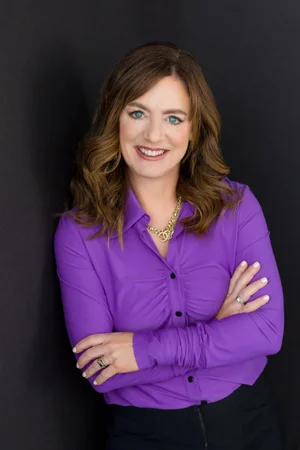
By Sheri Jacobs | Keynote Speaker, Researcher, CEO, and Bestselling Author
Choosing the right healthcare innovation keynote speaker can make the difference between a conference that inspires attendees for an hour and one that changes how they approach their work.
Healthcare leaders face a challenge few other industries experience in quite the same way. They're expected to improve patient experiences, embrace new technologies, control costs, strengthen teams, and lead organizational change while protecting patient safety, privacy, and quality of care.
They cannot simply experiment without considering the consequences. But they cannot afford to stop innovating either.
That's why the best healthcare keynote speakers do more than encourage audiences to embrace change. They help leaders understand where change is possible, which boundaries matter, and how to turn promising ideas into meaningful action.
If you're planning a healthcare leadership conference, hospital executive meeting, healthcare marketing summit, patient experience conference, or medical association annual meeting, here are seven things to look for when selecting your keynote speaker.
1. Choose a Healthcare Keynote Speaker Who Understands the Industry's Challenges
Healthcare professionals don't need someone to tell them their industry is changing.
They're living it.
Hospital executives are balancing financial pressures with patient care. Healthcare marketers are working to build consumer trust while navigating privacy requirements and changing expectations. Nursing leaders are managing workforce challenges. Medical associations are helping their members prepare for an uncertain future.
An effective healthcare leadership keynote speaker should recognize these realities rather than deliver a generic motivational presentation.
More importantly, the speaker should understand that not every constraint is an obstacle.
Patient safety protocols, clinical oversight, privacy protections, and regulatory requirements exist for important reasons. The goal of innovation isn't to remove those boundaries. It's to identify where organizations have room to improve while protecting what matters most.
In my keynote, The Unexpected Power of Boundaries, I challenge a familiar assumption: that creativity requires unlimited freedom.
My research and experience suggest something different. When people understand the boundaries within which they can act, they are often better equipped to make decisions, contribute ideas, and experiment responsibly.
For healthcare leaders, this distinction matters. Innovation isn't about choosing between progress and protection. It's about understanding how the two can work together.
2. Look for a Healthcare Innovation Keynote That Provides a Practical Framework
Healthcare organizations rarely suffer from a shortage of ideas.
Employees see opportunities to improve patient communications, reduce administrative friction, strengthen collaboration, improve scheduling, and simplify internal processes.
But recognizing an opportunity and acting on it are two different things.
One of the biggest obstacles to innovation is uncertainty about decision-making authority.
Who can approve a change? What risks are acceptable? Which decisions require additional review? Where can employees act without asking permission?
When those questions are unanswered, even talented teams can hesitate.
A strong innovation keynote speaker should give attendees a framework they can apply after the event.
My keynote introduces three steps:
Define the Boundary. Identify what must remain consistent, what risks the organization has the capacity to absorb, and where employees have flexibility.
Empower the Players. Establish clear decision-making authority and create conditions where employees feel comfortable sharing ideas, questioning assumptions, and contributing to improvements.
Take More Shots. Encourage small, thoughtful experiments that allow teams to test ideas, learn, and make progress without placing the entire organization at risk.
For healthcare leaders, this framework helps distinguish between changes that require extensive clinical or regulatory oversight and improvements that teams may be able to test within existing policies.
When evaluating a keynote speaker for your healthcare conference, ask a simple question: Will our attendees leave knowing how to take a practical next step?
3. Find a Healthcare Leadership Speaker Who Connects Psychological Safety With Accountability
In healthcare, speaking up matters.
Employees need to feel comfortable reporting concerns, questioning established practices, raising problems, and offering suggestions.
Yet healthcare organizations often operate within complex hierarchies, professional disciplines, and approval structures.
An employee may recognize a better way to accomplish something but hesitate to suggest it.
This is where psychological safety becomes important.
Psychological safety doesn't mean removing accountability, lowering expectations, or giving everyone permission to do whatever they want.
It means people can contribute ideas, ask questions, and acknowledge uncertainty without fear of embarrassment or punishment for making a thoughtful contribution.
But psychological safety alone isn't enough.
People also need to understand the boundaries of their authority.
In my work, I introduce The Creativity Code, a model built around two conditions: psychological safety and clear boundaries.
When psychological safety is low, people may remain silent even when they have valuable insights.
When boundaries are unclear, people may speak up but struggle to translate ideas into action.
When leaders establish both conditions, teams have a clearer understanding of where they can contribute and how to move forward.
This approach is particularly relevant for hospital leadership teams, healthcare executives, medical associations, and organizations working to strengthen collaboration across departments.
A healthcare leadership keynote should leave attendees thinking differently about the conditions they create for their teams.
4. Choose a Speaker Who Can Address AI in Healthcare Without Overlooking Human Judgment
Artificial intelligence has become an important conversation at healthcare conferences.
The opportunities are significant. AI may help organizations improve administrative efficiency, manage information, support communication, and streamline selected workflows.
But healthcare also presents questions that cannot be answered by technology alone.
Who is responsible for reviewing AI-generated information?
What data can employees share with an AI system?
Which uses require additional approval?
Where must human judgment remain central?
And how should leaders decide when an AI application introduces more risk than value?
These are leadership decisions, not simply technology decisions.
An effective healthcare AI keynote speaker should help audiences think beyond the capabilities of individual tools.
I encourage organizations to establish clear boundaries for AI adoption, including activities where AI may be appropriate, situations requiring additional oversight, and applications that should remain off-limits.
For healthcare organizations, those decisions must account for patient privacy, accuracy, applicable regulations, and clinical responsibility.
The most important question isn't whether an organization is using the newest technology.
It's whether the technology helps the organization accomplish something important, with the right safeguards in place.
An innovation keynote that addresses AI should leave healthcare leaders better prepared to make those decisions rather than feeling pressured to adopt every new tool.
5. Make Sure the Keynote Speaker Will Customize the Presentation for Your Healthcare Audience
Not all healthcare conferences are alike.
A hospital CEO summit has different priorities than a healthcare marketing conference. A nursing leadership event differs from a medical association annual meeting. A gathering of patient experience professionals will approach innovation differently than a group of healthcare technology executives.
That's why customization matters.
When preparing a keynote, I want to understand the people who will be in the room.
What decisions are they responsible for? Which pressures are most significant? What changes are they being asked to implement? What would make the presentation useful to them?
For example, healthcare marketing and strategy professionals may be focused on consumer trust, digital engagement, organizational alignment, and changing patient expectations.
Hospital executives may be more concerned with leadership, operational performance, collaboration, and the organization's capacity for change.
Medical association leaders may be focused on helping members navigate uncertainty, demonstrate value, and adapt to new expectations.
The central ideas in my keynote remain consistent, but the examples, questions, and applications change based on the audience.
In September 2026, I delivered the closing keynote at SHSMD Connections, an American Hospital Association conference bringing together healthcare marketing, strategy, communications, and business development professionals.
My presentation, The Unexpected Power of Boundaries, focused on helping leaders rethink risk, understand the conditions that support creativity, and identify ways to move ideas forward within the realities of their work.
If you're interviewing healthcare conference keynote speakers, ask how they plan to adapt their presentation for your attendees.
A customized keynote should reflect the audience's responsibilities and challenges, not simply add the organization's name to a few slides.
6. Find a Healthcare Keynote Speaker Who Challenges Conventional Thinking
One of the most familiar pieces of advice in business is also one I believe deserves to be challenged.
Think outside the box.
We've repeated that phrase for decades, assuming it encourages creativity.
But what if it sometimes does the opposite?
Consider a healthcare leadership team asked to develop innovative ways to improve the patient experience.
Without a defined objective, clear expectations, or an understanding of available resources, the team may generate a long list of ideas without knowing what to pursue.
Now imagine that same team receives a more specific challenge.
Improve the clarity of patient communications while maintaining accuracy, meeting privacy requirements, and working within the existing budget.
The boundaries don't eliminate creativity.
They give the team a starting point.
In my research and work with organizations, I've found that clarity can be more useful than an open-ended invitation to innovate.
When people understand what they're trying to accomplish and where they have freedom to act, they can spend less time interpreting expectations and more time exploring solutions.
That's the thinking behind The Unexpected Power of Boundaries.
The most effective healthcare innovation keynote doesn't simply reinforce what leaders already believe. It introduces a different perspective and helps them consider how that perspective could change their decisions.
7. Choose a Healthcare Conference Keynote Speaker Who Helps Attendees Take Action
One of the biggest challenges facing conference organizers happens after the conference ends.
Attendees return to crowded calendars, urgent responsibilities, and the everyday demands of their organizations.
The ideas that felt exciting during a keynote can quickly disappear.
That's why a memorable presentation isn't necessarily an effective one.
A strong healthcare conference keynote should give people something they can do differently when they return to work.
In my presentations, I encourage audiences to Take More Shots.
This doesn't mean making reckless decisions or pursuing every idea.
It means identifying opportunities for small, thoughtful experiments.
For healthcare teams, that could involve testing a more effective internal meeting structure, improving the clarity of nonclinical patient communications, or examining whether employees have sufficient authority to address routine service issues.
Experiments must remain within appropriate organizational policies and approval requirements, particularly when patient care, safety, privacy, or regulated activities are involved.
The idea is to replace indefinite discussion with carefully considered action.
I challenge attendees to identify one smart step they can take within the next 30 days.
Sometimes that step is a conversation. Sometimes it's clarifying a decision-making boundary. Sometimes it's testing an improvement on a limited scale.
The goal is to make the ideas from the keynote useful long after the conference ends.
Healthcare Keynote Topics That Resonate With Today's Leaders
When selecting a keynote speaker for a healthcare conference, look for topics that connect directly to your audience's responsibilities.
For hospital executives, healthcare associations, and medical leadership teams, relevant keynote topics include innovation and organizational change, leadership during uncertainty, psychological safety and accountability, AI and human judgment, employee empowerment, patient experience, creative problem-solving, and responsible risk-taking.
These themes are closely related.
Leaders cannot encourage innovation without considering risk. Teams struggle to act when expectations are unclear. New technologies create opportunities but also require thoughtful decisions about human oversight.
The Unexpected Power of Boundaries connects these issues through a practical approach to leadership, creativity, and organizational change.
For information about my keynote topics, visit my leadership keynote speaking page or explore my AI keynote presentation.
Frequently Asked Questions About Healthcare Keynote Speakers
What should I look for in a healthcare innovation keynote speaker?
Look for a speaker who understands healthcare's operational and regulatory complexities, offers a clear framework for innovation, and can translate leadership ideas into practical applications. The best healthcare keynote speakers customize their content for the audience and provide actionable takeaways that remain useful after the conference.
What are the best keynote topics for healthcare leadership conferences?
Strong healthcare leadership keynote topics include innovation, organizational change, AI adoption, psychological safety, employee engagement, patient experience, leadership accountability, and risk management. The right topic depends on the conference's goals and the responsibilities of attendees.
Can an innovation keynote speaker be effective at a healthcare marketing conference?
Yes. Healthcare marketing professionals face challenges involving consumer trust, digital engagement, changing patient expectations, organizational alignment, and limited resources. An innovation keynote can help these professionals approach problems differently while respecting privacy, accuracy, and institutional requirements.
Does a healthcare keynote speaker need a clinical background?
Not necessarily. Clinical expertise is essential when a presentation offers specialized medical education or clinical guidance. For conferences focused on leadership, organizational culture, innovation, strategy, or change