Top Innovation Keynote Speakers for Corporate Events in 2026
If you're searching for an innovation keynote speaker for a corporate event, you've probably noticed the category is crowded. Speaker bureau pages list hundreds of names, and most of the descriptions sound the same. Every speaker is "thought-provoking." Every keynote promises a "fresh perspective." It's hard to tell who has actually done the work and who just talks about it.
This list is built for corporate event planners, CEOs, conference chairs, and association executives who are choosing an innovation keynote speaker for an annual meeting, leadership retreat, sales kickoff, or industry conference. The speakers below combine two things that don't always travel together: real operating credentials in innovation and the stage presence to make those ideas land for a corporate audience. They span entrepreneurship, design, organizational psychology, trend forecasting, and applied research. Several have written New York Times bestsellers. A few have shared stages at the World Business Forum and TED.
Fees in this category typically range from $25,000 on the lower end to well over $100,000 for the most in-demand names. Topics include creativity, risk-taking, disruption, design thinking, culture change, and the operational side of getting new ideas out the door.
Here are 10 innovation keynote speakers worth considering for your 2026 events.
1. Sheri Jacobs
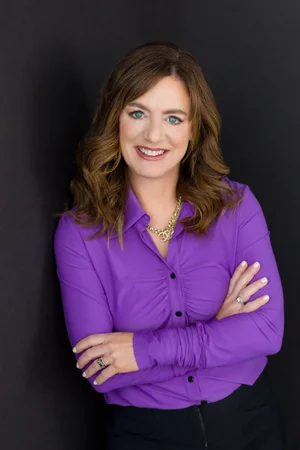
Sheri Jacobs is an innovation keynote speaker, four-time bestselling author, and CEO of Avenue M Group, an independent research and consulting firm. Her latest book, The Unexpected Power of Boundaries (Amplify, 2026), hit #1 on Amazon in Technology and Innovation in its first week. The central idea, that strategic constraints enable rather than limit creativity, runs against the conventional "think outside the box" wisdom and gives audiences a more useful operating model. The framework rests on original research with nearly half a million professionals across 300 organizations, which Sheri has been collecting and analyzing for 16 years.
Her keynote opens with a polar bear encounter in the Arctic, closes with a humpback whale in Antarctica, and uses real client cases in between, including the SurePayroll pivot she co-authored about with founder Troy Henikoff for Harvard Business Review. Sheri has spoken at the World Business Forum in New York alongside Brené Brown, Seth Godin, and Adam Grant, and is scheduled for TEDxKC in July 2026. Past corporate and association clients include Neighborly, Church's Texas Chicken, AIA, AOTA, IFA, APTA, and AGC. She serves on the ASAE Board of Directors and is an award-winning wildlife photographer who has shot on all seven continents.
Best for: Corporate retreats, association annual meetings, leadership offsites, and innovation summits where audiences need a practitioner who can give them frameworks they can use Monday morning, not abstractions they'll forget by the elevator. Visit sherijacobs.com for speaker reel and topics.
2. Adam Grant
Adam Grant is the Saul P. Steinberg Professor of Management at Wharton and the bestselling author of Think Again, Originals, Give and Take, and Hidden Potential. His TED talks have been viewed tens of millions of times, and his podcast Re:Thinking features long conversations with leaders, scientists, and athletes about how they reconsider what they know. For corporate audiences, Grant's value is the rigor he brings to topics that usually get treated softly: how original thinkers actually develop ideas, how rethinking outperforms certainty, and why the most effective givers also build the most successful careers. His keynotes draw on peer-reviewed research and pair it with stories that don't feel like research at all.
Best for: Leadership conferences, executive forums, and large corporate audiences that want intellectual depth from an academic who can actually hold a stage.
3. Josh Linkner
Josh Linkner has founded and led five technology companies that collectively created over 10,000 jobs and sold for a combined value north of $200 million. He is a five-time New York Times bestselling author on innovation and creativity, a professional jazz guitarist who studied at Berklee, and the co-founder and managing partner of Mudita Venture Partners. On stage, he weaves live jazz improvisation into his keynote to demonstrate how creative constraint produces breakthrough work. The combination is unusual and memorable, and the operating credentials behind it are real.
Best for: Sales kickoffs, technology conferences, and large corporate events where you want a high-energy keynote with a built-in spectacle moment. He also wrote the foreword to Sheri Jacobs' The Unexpected Power of Boundaries.
4. Lisa Bodell
Lisa Bodell is the founder and CEO of FutureThink, one of the largest sources of innovation research, tools, and training in the world. She is the author of Why Simple Wins and Kill the Company, both built around a counterintuitive premise: that the biggest barrier to innovation isn't a lack of ideas but the accumulated complexity that smothers them. Her keynote gives audiences specific tools for killing the busywork, low-value meetings, and ritualized bureaucracy that drain the time their best people should be spending on the work that matters.
Best for: Large enterprise audiences, financial services, healthcare, and any organization where leaders openly admit that complexity is killing them.
5. Jeremy Gutsche
Jeremy Gutsche is the CEO of Trend Hunter, the largest trend-spotting platform in the world, and a New York Times bestselling author of Better and Faster and Create the Future. His keynote videos have been viewed more than 35 million times online, and he has delivered over 800 keynotes to organizations including Google, Microsoft, IBM, NASA, and Coca-Cola. Before founding Trend Hunter, he grew a $1 billion portfolio at Capital One. His talks are visually rich, data-heavy, and built around identifiable patterns of opportunity that audiences can apply to their own products and categories.
Best for: R&D leadership meetings, product strategy summits, and large-stage corporate events that want a high-energy keynote grounded in trend data rather than opinion.
6. Erica Dhawan
Erica Dhawan is recognized by Thinkers50 as one of the top 50 management thinkers in the world. She is the bestselling author of Get Big Things Done: The Power of Connectional Intelligence and Digital Body Language: How to Build Trust and Connection, No Matter the Distance. For corporate audiences working across hybrid teams, generations, and time zones, Erica's keynote is one of the most practical sessions available on how innovation actually happens when nobody is in the same room. She appears regularly in Harvard Business Review, Fast Company, and the Wall Street Journal.
Best for: Hybrid and distributed workforces, technology firms, professional services, and any organization where collaboration breakdowns are getting in the way of new ideas.
7. Duncan Wardle
Duncan Wardle spent more than three decades at Disney, ultimately serving as Head of Innovation and Creativity. He helped develop the methodologies that produced experiences like Magic Bands and Disney Imagination Campus, and he now runs iD8 & innov8, an innovation consultancy and online platform. His keynote walks audiences through the specific tools Disney used to generate, test, and ship new ideas at scale. It's hands-on, often funny, and avoids the abstract design-thinking treatment that has become its own kind of cliche.
Best for: Marketing and brand teams, hospitality, entertainment, retail, and any organization where customer experience is the competitive battleground.
8. Beth Comstock
Beth Comstock served as vice chair of General Electric and is the bestselling author of Imagine It Forward: Courage, Creativity, and the Power of Change. Few innovation speakers can match her perspective on what it actually takes to drive change inside a 300,000-person industrial company. She also chairs the board of the National Geographic Society and serves on the boards of Nike and Trustees of the Cooper Hewitt, Smithsonian Design Museum. Her keynote is honest about how hard internal innovation is and specific about the practices that move it forward anyway.
Best for: Large corporate audiences, women in leadership events, manufacturing and industrial sectors, and any organization where change resistance is the real obstacle to new growth.
9. Tom Kelley
Tom Kelley is a partner at IDEO, the global design and innovation firm, and co-author with his brother David Kelley of Creative Confidence: Unleashing the Creative Potential Within Us All. He is also the author of The Art of Innovation and The Ten Faces of Innovation. Tom's work has shaped how thousands of companies approach design thinking, customer empathy, and prototyping. His keynote draws on IDEO's project archive, including consumer products you've held in your hand without knowing the design story behind them.
Best for: Design and product teams, healthcare innovation, education sector audiences, and corporate strategy retreats focused on customer-centered growth.
10. Diana Kander
Diana Kander is a New York Times bestselling author of All In Startup and The Curiosity Muscle. She immigrated to the United States as a child, became a serial entrepreneur, and now coaches corporate teams on the disciplined curiosity that separates companies that keep innovating from companies that get comfortable. Her keynote is built around a research-backed thesis: that successful organizations decline not because they stop being smart but because they stop being curious. She brings humor, audience interaction, and surprising live demonstrations to a topic that other speakers tend to deliver as a lecture.
Best for: Mid-size corporate audiences, sales organizations, financial services, and any leadership team that knows it has become a little too sure of itself.
How to choose the right innovation keynote speaker for your event
A few things to think through before you start reaching out to speakers or bureaus.
Match the speaker to the audience problem, not the topic label. Innovation is a broad category. A sales team that needs to take more shots is a different audience than an R&D team trying to ship a product or an executive committee debating a strategic pivot. The strongest keynote is the one that addresses the actual decision your audience is facing in the next 90 days.
Look for primary-source experience. A speaker who has built something, run something, researched something firsthand, or invented something is bringing a different kind of authority than a speaker who has read about other people doing those things. Both can be useful. Only one tends to leave an audience with a usable framework.
Watch full keynote video, not sizzle reels. Sizzle reels are edited to make every speaker look great. A 20-minute unedited segment will tell you whether the speaker can hold a room without cutaways.
Confirm customization. Strong speakers will offer a prep call, integrate your audience's language and challenges into the talk, and tailor examples. Generic delivery is a sign you're getting the same keynote everyone else got.
Budget realistically. Top innovation keynote speaker fees range from about $15,000 to well over $100,000, with most established names landing between $15,000 and $75,000 for a one-hour keynote. Travel, accommodations, and book buys are usually separate. Bureaus typically take a commission from the speaker side, so the fee you're quoted is generally what you pay.
Frequently asked questions about hiring an innovation keynote speaker
How much does an innovation keynote speaker cost? Fees vary by profile, demand, and event format. Most established innovation keynote speakers charge between $15,000 and $75,000 for a one-hour corporate keynote. The most sought-after names with national platforms can exceed $100,000. Workshops, panel moderation, and breakout sessions are typically priced separately and can be bundled with a keynote engagement.
What's the difference between an innovation speaker and a futurist? Futurists focus on what's coming next, often around technology, AI, demographics, or geopolitics. Innovation speakers focus on how organizations and teams actually generate, test, and ship new ideas. Some speakers cover both, but the audience need is usually different. Futurists are best for setting context. Innovation speakers are best when the audience needs to leave with tools they can apply.
What questions should we ask before booking? Ask about customization, recent client examples in your industry, what the audience will be able to do differently after the keynote, and whether the speaker will be available for a meet-and-greet or executive Q&A. Also ask for two or three references from clients whose events looked like yours.
If you're looking for an innovation keynote speaker who combines original research, real operating experience, and a customized keynote built around your audience's actual challenges, contact Sheri Jacobs directly to check availability for your 2026 event.
Table of Contents