The Most Requested Keynote Speakers of 2026
A curated, criteria-based guide from inside the association and conference world. Updated April 2026.
The keynote speaker market in 2026 looks different than it did even two years ago. Audiences want less performance and more substance. Boards want speakers who can move strategy, not just energy. And event planners are working with tighter budgets, shorter attention spans, and rooms full of people who can fact-check a claim from their seats.
This guide reflects what is actually happening on the ground. It draws from conversations with bureau agents, conference planners, association executives, and the data Avenue M Group sees every year about what attendees say they want from a keynote. The list is organized by topic so planners can move quickly to the categories that fit their event.
A note on what is not here: there is no ranking of "the #1 speaker." That kind of list tends to reflect bureau marketing more than booking reality. The speakers below are the ones whose names come up most often when planners ask each other, "Who should we book for our 2026 event?"
How this list was built
Four criteria shaped the selection:
Active on the 2026 circuit. Each speaker is currently booking dates in 2026 and has delivered keynotes within the past 12 months at major conferences, corporate summits, or association events.
A defined point of view. Vague "thought leadership" did not qualify. Each speaker has a clear thesis, a body of work behind it, and content that holds up to a follow-up question.
Consistent demand across sectors. Speakers who only appeal to one vertical were excluded. The names below are getting booked across financial services, healthcare, technology, associations, and education.
Audience response. Direct planner feedback and post-event survey data carried more weight than social media follower counts.
This is a curated list, not a comprehensive one. Speakers who are excellent but currently on sabbatical, focused on book tours rather than keynotes, or commanding fees that put them out of reach for most events were left off.
Innovation, strategy, and the future
Seth Godin
The defining marketing voice of the past two decades remains one of the most requested speakers for events that need a tone-setting opener. His current keynotes focus on strategy, the difference between selfish and generous work, and what it takes to lead change inside organizations that resist it. Best for opening keynotes where the planner wants the room rethinking assumptions before the first breakout.
Amy Webb
Founder of the Future Today Strategy Group and author of the annual Tech Trends Report. Her data-dense, scenario-based talks are a fixture at C-suite gatherings, board retreats, and innovation summits. She is one of the few futurists who shows the work behind the forecast.
Rohit Bhargava
Author of the Non-Obvious Megatrends series and a steady presence on association main stages. His value is the ability to translate trend research into things a planner's audience can actually do on Monday morning. Strong fit for marketing, brand, and innovation conferences.
Whitney Johnson
Built her reputation on the S-Curve of Learning framework and is now one of the most requested speakers for talent and leadership development events. Her work on disruption applied to careers and teams hits a nerve in the current labor market.
Ian Bremmer
Founder of Eurasia Group and one of the few geopolitical analysts who can hold a corporate audience for an hour. Heavily booked through 2026 by financial services firms, executive forums, and global associations trying to make sense of trade policy, AI regulation, and election cycles.
AI and technology
Cassie Kozyrkov
Google's first Chief Decision Scientist and now an independent advisor. Her keynotes cut through the noise around AI by focusing on decision quality, not the technology itself. Particularly strong for executive audiences that have heard ten AI talks already and want a different lens.
Allie K. Miller
Former Global Head of Machine Learning for Startups at Amazon Web Services. She has become one of the most-booked AI speakers for general business audiences because she explains what the technology can actually do without selling fear or hype. Strong on-stage presence and a large enterprise client base.
Sol Rashidi
Helped launch IBM Watson and has led AI transformations at multiple Fortune 100 companies. Her practical perspective on what works and what wastes money makes her a popular pick for boards and senior leadership offsites.
Ethan Mollick
Wharton professor and author of Co-Intelligence. His research on how knowledge workers actually use generative AI has made him a frequent keynote at higher education, professional services, and association events focused on workforce transformation.
Ian Khan
Futurist and Thinkers50 author. His sessions are built around AI readiness, with a workshop component that gives attendees an action plan rather than just a forecast. Increasingly booked for closed-door executive briefings.
Leadership and culture
Brené Brown
Still one of the most requested speakers in the world, with limited availability and a fee that reflects it. Her current work on leadership, courage, and trust continues to land in rooms full of senior executives who would not have been caught dead at a "vulnerability" talk a decade ago. Worth the investment for events where the goal is a cultural reset.
Adam Grant
Wharton organizational psychologist, author of Hidden Potential and Think Again, and host of the Re:Thinking podcast. He delivers content that works for both leadership audiences and broader professional groups, with research backing every claim. Tight calendar, books well in advance.
Simon Sinek
The "Start With Why" thesis is twenty years old and still selling out auditoriums. His more recent work on the infinite mindset and trusting teams keeps him in the rotation for leadership conferences. Strong fit for events that need a unifying theme.
Patrick Lencioni
Author of The Five Dysfunctions of a Team and a steady draw for executive teams and association leadership conferences. His content travels well because most organizations recognize themselves in it within the first ten minutes.
Erin Meyer
INSEAD professor and author of The Culture Map. Heavily booked for global leadership programs, executive education, and any event where the audience is wrestling with cross-cultural collaboration. The framework has become standard reading inside multinationals.
Resilience, mindset, and personal performance
Mel Robbins
One of the most-booked motivational speakers in the world right now, driven in part by the reach of her podcast. Her content is accessible without being thin, and she works equally well for sales kickoffs, women's leadership events, and association main stages.
Michael Phelps
The Olympic record holder has built a second act around mental health advocacy. Books well for events that want a high-recognition name with substance underneath. Strong fit for healthcare, education, and corporate wellness conferences.
Misty Copeland
The first Black woman to be named Principal Dancer at American Ballet Theatre. Her keynotes on representation, perseverance, and redefining what is possible work for a wide range of audiences, including those that would not normally book a "performer" speaker.
Jason Redman
Retired Navy SEAL lieutenant whose story of catastrophic injury and recovery anchors a leadership and resilience message. Heavily requested for sales conferences, financial services events, and groups that respond to a high-energy delivery.
Derek Redmond
The British Olympic sprinter whose father helped him finish the 400 meters at Barcelona is now one of the highest-rated motivational speakers in Europe and increasingly the United States. His message lands without sentimentality, which is why corporate audiences keep rebooking him.
Future of work and human performance
Cal Newport
Georgetown computer science professor and author of Deep Work and Slow Productivity. His critique of always-on work culture has become required reading for executives trying to fix productivity without burning their teams out further. Strong fit for professional services and knowledge-worker audiences.
Lynda Gratton
London Business School professor and one of the foremost researchers on the future of work. Her keynotes for boards and senior HR audiences carry weight because the underlying research is rigorous.
Dan Heath
Co-author of Made to Stick, Switch, and Upstream. Steady demand from association and corporate audiences who want practical content delivered with humor. Particularly effective for events focused on change, problem-solving, and strategy.
Amy Edmondson
Harvard Business School professor whose work on psychological safety and intelligent failure has become foundational for leadership development. Booked far in advance, especially for healthcare, technology, and academic medicine audiences.
What planners are actually booking in 2026
A few patterns are worth noting if you are building a 2026 agenda:
AI fatigue is real, AI demand is not slowing. Audiences are tired of AI talks that are basically vendor pitches in disguise. They are still booking AI keynotes at record rates. The speakers winning right now are the ones who treat AI as a leadership and decision-making question, not a software demo.
The mental health conversation has matured. Two years ago, planners were booking mental health speakers for the topic itself. In 2026, the booking pattern has shifted toward speakers who connect mental health to performance, retention, and leadership effectiveness. The speakers who only have one note are getting fewer dates.
"Customized for your audience" is now table stakes. Planners are pushing back on canned keynotes. The speakers booking the most dates are the ones willing to do real prep calls, review attendee data, and tailor at least the opening and closing segments to the room.
How to choose the right keynote speaker for your event
Most bad keynote bookings happen for the same reason: the planner started with a name instead of a goal. Three questions help avoid that.
First, what is the one thing you want the audience to think, feel, or do differently when they walk out of the room? If you cannot answer that in a sentence, no speaker will fix it.
Second, where does this keynote sit in the program? An opening keynote does different work than a closing one. The opener sets the frame for everything else; the closer needs to send people home with momentum. Booking a thoughtful, slow-build speaker for a closing slot, or a high-energy motivational speaker for an opening slot, is a common mismatch.
Third, what is the conversation the audience is already having? The most effective speakers sharpen and redirect a conversation that is already in the room. The least effective ones drop in content the audience was not asking for.
Frequently asked questions
How much does a top keynote speaker cost in 2026? Fees for the speakers on this list generally range from $15,000 to $200,000 plus expenses, with the most-requested names (Brené Brown, Simon Sinek, Adam Grant, Mel Robbins) at the top of that range or above. Mid-tier specialists in AI, leadership, or innovation typically fall between $25,000 and $75,000. Virtual keynotes are usually 30 to 50 percent less than in-person fees.
What is the difference between a keynote speaker and a motivational speaker? A keynote speaker delivers a session designed to anchor the theme or strategy of an event. A motivational speaker focuses primarily on inspiration and energy. The categories overlap, but planners running strategy-driven events often want a keynote that informs and challenges, not just one that motivates.
Are speaker bureaus worth using? For most planners, yes. Bureaus handle contracting, travel logistics, and post-event evaluation, and they often have current pricing and availability that is faster to confirm than going direct. A good bureau will also push back if the speaker you want is the wrong fit for your audience, which is worth more than it sounds.
Which 2026 keynote topics are in highest demand? Based on planner surveys and bureau booking data: AI applied to actual work, leadership in periods of disruption, the future of work and workforce strategy, mental health connected to performance, and innovation under constraint. Geopolitics and trade are gaining ground quickly.
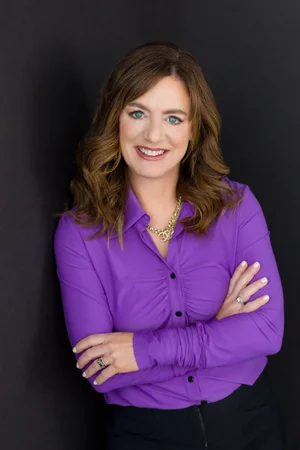
About the author: Sheri Jacobs, FASAE, CAE, is the President and CEO of Avenue M Group, a research and consulting firm that has worked with more than 300 organizations and surveyed nearly half a million professionals. She is the author of The Unexpected Power of Boundaries (Amplify Publishing, 2026). She has delivered keynotes alongside speakers including Brené Brown and Seth Godin, and works closely with conference planners across the association and corporate worlds.
Table of Contents